Year-End Tax Planning for Small Business Owners and the Decisions to Make Before the Books Close
Why the final months of the year still shape your tax outcome

Tax preparation reports results that are already final. Tax planning looks at which choices may still be open.
By early fall, many businesses have enough real results to see where the year is heading. The options tend to narrow as December gets closer.
For owners, this window is a chance to make sound choices while there is still time.
Start with current books and a realistic projection
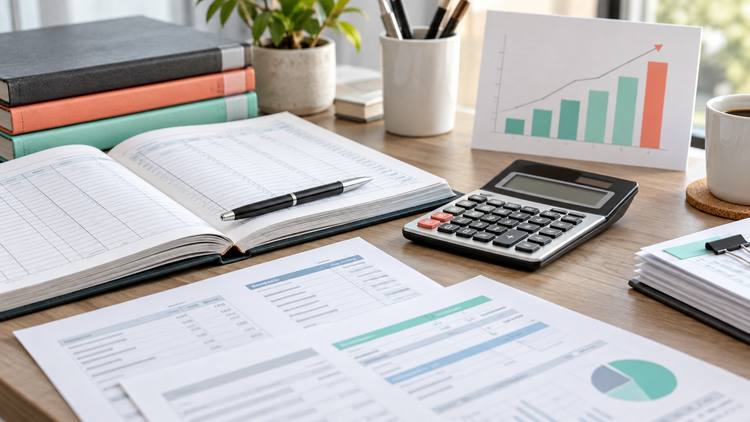
Good planning depends on books that are fairly current. Bank, credit card, and loan accounts should match the records, expenses should be categorized correctly, and personal costs should stay separate from business costs.
Before year-end, an accountant may also confirm payroll, contractor W-9s, worker classifications, and fixed-asset records. For partnership and S corporation owners, current records help track distributions and tax basis, which reflects each owner’s investment in the business.
A year-end projection estimates taxable income, the likely tax bill, and whether estimated payments still fit. It can also reveal why taxable income and cash differ because of unpaid invoices, inventory, debt payments, equipment purchases, or owner distributions.
Timing decisions around income and expenses

A business’s accounting method affects when income and costs count. Within those rules, an accountant may discuss moving income or expenses between years based on expected tax rates and business goals.
The options have limits. Money the business can already access is generally treated as received, not every prepaid expense counts this year, and accrual-method bonuses paid after year-end qualify only under certain conditions.
Cash needs still matter. Delaying income or accelerating a cost may not be practical when the business needs that money for operations.
Equipment and asset purchases

To count toward this year, an asset generally needs to be delivered and ready to use. Ordering or paying for it is usually not enough.
Under current federal law, 100% bonus depreciation is available for qualifying property. It applies to property acquired after January 19, 2025.
For 2026, Section 179 may allow up to roughly $2.56 million to be deducted in the first year. That limit phases out at higher spending levels.
Not every asset qualifies. Other rules also apply.
Retirement contributions and owner compensation

Both topics are often reviewed before the last payroll of the year.
- Retirement plans. A 401(k), SEP IRA, or SIMPLE IRA may reduce taxable income. Each has its own setup deadlines and contribution rules. Each also has rules on which employees must be covered. Payroll contributions are generally tied to year-end. Some employer contributions and SEP funding may be allowed up to the return due date, including extensions. For 2026, the 401(k) employee limit is $24,500. People age 50 and older may add catch-up amounts if they qualify.
- S corporation owner pay. Owners who work in the business generally need a reasonable wage through payroll. This comes before they take distributions. There is no set percentage. Duties, experience, hours, industry, and the cost of similar work all play a role. Paying too little can draw scrutiny. Paying more than needed may raise payroll taxes.
Other items an accountant may raise

Depending on the business, the talk may also cover these topics.
- Tax credits, such as research and development, Work Opportunity, or certain energy-efficiency credits
- How projected income may affect the qualified business income deduction, which some pass-through business owners can claim
- Charitable gifts, which generally count in the year they are completed and need proper records
- Whether the business structure still fits, since some tax elections have filing deadlines worth discussing early
Keep tax decisions connected to cash flow

A possible deduction alone does not make a purchase worthwhile. Hiring, bonuses, and owner distributions draw from the same cash.
A cash-flow forecast and a reserve target can help keep these choices within what the business can support.
What EXCOL’s year-round tax work has shown

EXCOL’s accounting experience dates to 1994 and includes bookkeeping, payroll, tax preparation, financial planning, and work with current and past-due records. Across that work, one lesson repeats.
Year-end choices are easier to evaluate when the books, payroll records, and supporting documents have been maintained throughout the year.
Current records let the firm connect tax options to cash flow, owner pay, equipment plans, estimated payments, and next year’s goals. That broader view helps keep a possible deduction from becoming a decision that leaves the business short of cash or creates a new compliance problem.
Why small businesses work with EXCOL before the books close
Small business owners use EXCOL for year-round, bilingual accounting and tax support. With bookkeeping, payroll, tax preparation, and financial planning in one place, the firm can explain how each decision affects the tax return and the business’s financial health.
Frequently Asked Questions About Year-End Tax Planning
What records help support an equipment deduction?
Invoices can help. So can records of when the item was delivered and put into use.
These details can help show the asset was placed in service during the year.
Can S corporation owner pay still be adjusted late in the year?
Often, yes. A review before the last payroll of the year can leave room to make changes.
What if estimated tax payments have fallen behind?
An accountant may compare payments with the updated projection. The accountant may also check them against general safe-harbor rules.
These rules can help owners avoid penalties when payments reach certain levels.
The last quarterly payment may then be adjusted. For S corporation owners, extra withholding through payroll may be another option to discuss.
What if the business had a loss this year?
The usual approach may reverse. Depending on future income, it may make sense to delay some deductions.
Bringing income into the lower-rate year may also be worth a look.
Do state taxes change the year-end picture?
They can. State rules and elections may affect the plan along with federal planning.
One example is the pass-through entity tax election offered in some states.