What Is a Payroll Register, and What Problems Can It Help a Business Catch?
One report that shows the full picture of each pay run

Hours, pay rates, taxes, deductions, and take-home pay all have to line up for every worker. A payroll register puts those details in one report for a single pay period, then totals them for the whole team.
For owners, this is often where payroll gets checked before money goes out. It also feeds tax reports and can make labor costs easier to see.
What a payroll register usually includes
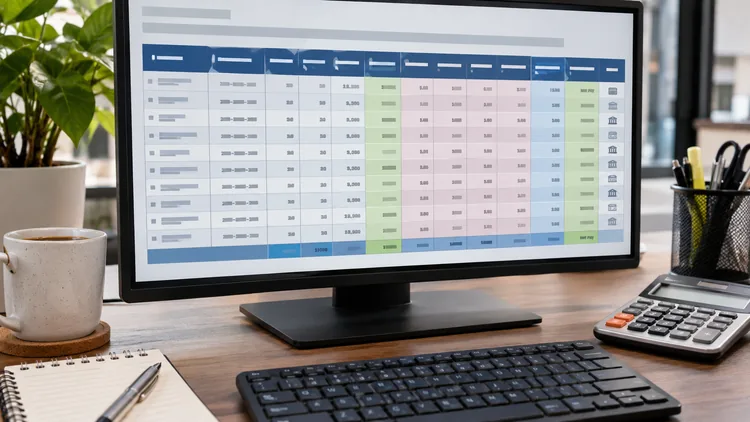
Formats vary, but most share a similar layout. Each row usually stands for one worker, and each column holds one piece of pay data.
- Employee name and ID
- Pay period dates and the pay date
- Regular hours, overtime hours, and the pay rate
- Gross wages, or pay before taxes and deductions, plus extras such as bonuses
- Federal, state, and local income tax withheld
- The worker’s share of Social Security and Medicare
- Deductions the worker chose, such as health insurance
- Required deductions, such as wage garnishments
- What the employer pays toward taxes and benefits
- Net pay and how it was paid
- A totals row that adds up each column
Some registers leave out taxes the employer pays. Those may appear in a separate report.
How accountants review a payroll register before pay goes out

Many accountants review the register before payroll is final. Fixing a draft is usually much easier than undoing a payment, and correct, on-time pay helps build trust.
The review often compares the register with the records behind it. Hours may be matched to approved timesheets, and pay rates may be checked after a raise.
Deductions are usually compared with benefit choices and court orders on file. Reviewers also tend to confirm that net pay equals gross pay minus taxes and deductions.
Totals are often compared with the last pay period. A big swing may need a closer look.
Old tax tables, uneven data entry, and missing forms such as the W-4 can also carry errors forward.
Worker classification matters too. Whether someone is exempt or non-exempt, or paid hourly or by salary, can change how hours and overtime appear.
How register totals support bookkeeping and tax reporting
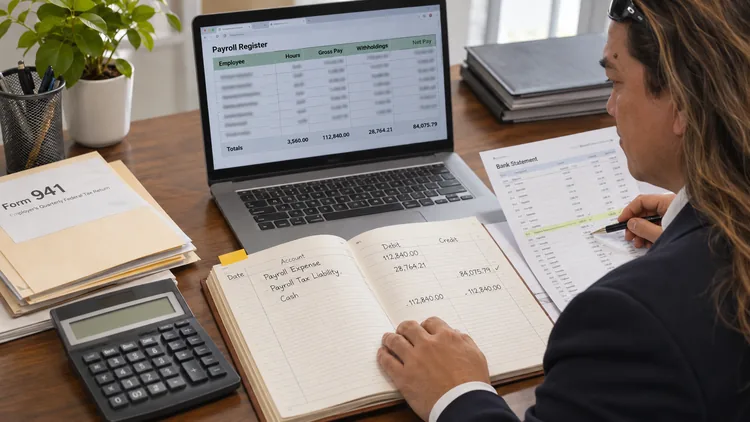
Reconciling payroll with the books
Register totals are usually compared with the general ledger, the payroll journal, and bank records. When the numbers do not match, accountants tend to trace the gap to its source.
Quarterly Form 941 and year-end reporting
Form 941 is the federal payroll tax return filed each quarter. It draws on total wages, federal income tax withheld, and both shares of Social Security and Medicare.
At year end, W-2 amounts can be built from a full year of registers.
Payroll tax payments and state obligations
The register helps show how much to set aside for taxes taken from pay and taxes the employer owes. State and local tax rules vary by location, but the register holds the details those filings often need.
Keeping records ready for questions or reviews
The IRS, the Department of Labor, or a state agency may ask to see payroll records. A complete register can help show what was paid and withheld.
Recordkeeping rules differ from place to place. Because registers hold private data, access is usually limited to approved staff.
What payroll register trends can reveal about labor costs

Over several pay periods, registers can show trends. These might include rising overtime, seasonal staffing changes, or costs moving between departments.
These patterns can help with budgets, forecasts, and plans for bonuses, benefit renewals, or new hires. In this way, the register speaks to business health, not only compliance.
What EXCOL’s payroll experience adds to register review

EXCOL’s accounting background dates to 1994, and its payroll work includes Form 941 reporting, quarterly and annual filings, payroll tax payments, recordkeeping, and worker-classification questions.
The firm has also worked with federal, state, and local tax authorities on payroll and tax matters. That experience gives EXCOL a practical view of how an error in one register can carry into later pay runs, bookkeeping, tax deposits, and filings.
Rather than treating the register as a stand-alone spreadsheet, EXCOL reviews payroll reporting in the context of the records behind it and the owner’s wider accounting obligations.
Why business owners bring payroll reporting to EXCOL

Small-business owners often need more than a report. They need help connecting payroll totals to the books, tax filings, and labor costs. EXCOL provides payroll, bookkeeping, tax, and financial support in one place, with service available in English and Spanish.
That year-round connection can help an owner correct inconsistent records before they spread across quarters and understand what the numbers mean for compliance and business decisions. Owners who want that support can contact EXCOL’s payroll team.
Frequently Asked Questions About Payroll Registers
How is a payroll register different from a pay stub?
A pay stub shows one worker’s pay and deductions for a single pay period. A payroll register covers every worker in that period and is usually kept as an internal record.
Is a payroll register the same as a payroll journal?
Not quite. A payroll journal shows how payroll affects the general ledger, while the register shows each worker’s pay details.
Can a small business keep a payroll register in a spreadsheet?
A spreadsheet may work for a few workers with simple pay. As pay rates, garnishments, or out-of-state workers add up, the risk of manual errors tends to grow.
How long are payroll registers usually kept?
Federal labor rules generally call for keeping payroll records at least three years. The IRS generally expects tax records to be kept at least four, and some states expect longer.
When might a business bring in an accountant for payroll?
Many owners look for outside help as the team grows. Classification questions, quarterly filings, or letters from tax agencies can also prompt that step.